
Waze, the popular navigation application owned by Google, is introducing a suite of new functionalities driven by artificial intelligence and enhanced customization options. These updates encompass conversational road reporting, intelligent destination search powered by Google's Gemini AI, a specialized mode for motorcyclists, and a 'less chatty' driving experience. These advancements signify Google's commitment to integrating its Gemini AI across various platforms, while simultaneously bolstering Waze's position in the competitive navigation app market, particularly against services such as Apple Maps.
A key enhancement includes personalized route suggestions, which now consider a user's past travel preferences and the city's traffic patterns. For instance, individuals who favor highways will find such routes prioritized. Users maintain control, with the option to select alternative routes or disable this personalization entirely through their settings. This feature is currently being deployed globally across both Android and iOS devices. Additionally, Waze now leverages Gemini AI to facilitate destination searches through natural language interactions. Users can articulate their needs, such as "Locate an open coffee shop now," or "Find the closest gas station with the lowest prices," and Waze will present a curated list of choices. This conversational search capability is being progressively rolled out to Waze's beta community worldwide for Android and iOS users.
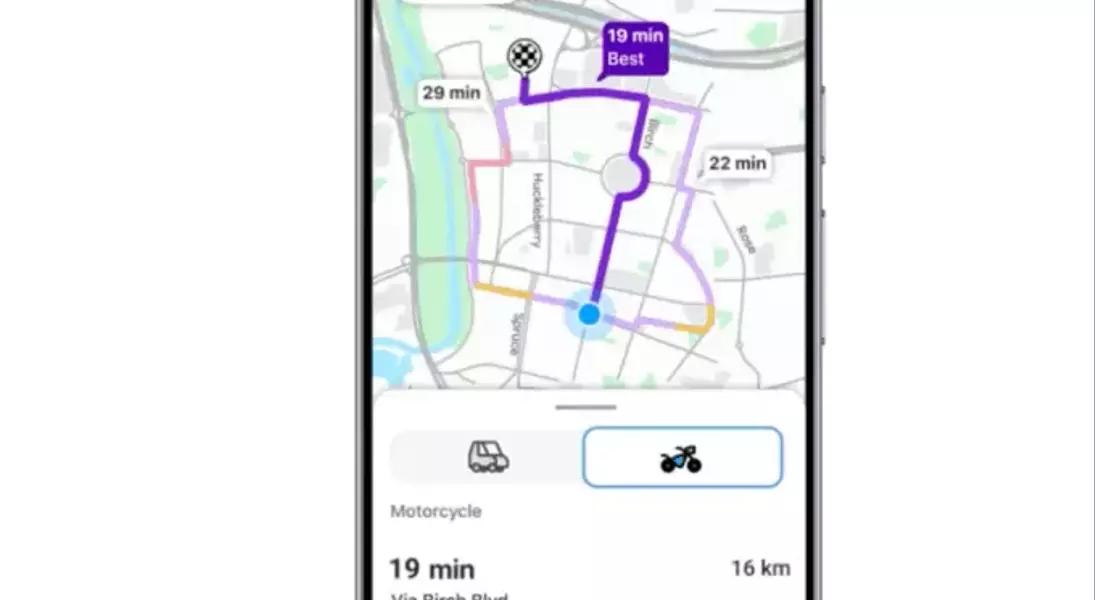
Furthermore, Waze is unveiling a new Motorcycle mode, which intelligently optimizes routes for two-wheelers. This mode considers motorcycle-specific shortcuts and road restrictions, providing riders with more accurate estimated times of arrival. It also highlights potential hazards that could impact motorcyclists, including potholes, speed bumps, elevated crosswalks, shoulder endings, and narrow bridges. The Motorcycle mode is presently available in Argentina, Brazil, Colombia, Malaysia, Mexico, Peru, and the Philippines, with plans for broader availability in the future.
While Waze has long allowed users to verbally report traffic incidents like slowdowns, it now extends this functionality to include conversational map updates. Users can report road closures or outdated addresses simply by speaking, for example, "The road is closed here." These details are then transmitted to local map editors. This intuitive road update feature is being deployed globally on Android and iOS. Complementing these additions, a new 'less chatty' mode minimizes audio interruptions during drives, ideal for users who prefer to focus on music or podcasts. When activated, this setting streamlines voice prompts, making them concise and less frequent, while still providing essential alerts for hazards and turns. The 'less chatty' mode is also now globally available for Android and iOS users.
These comprehensive updates underscore Waze's dedication to leveraging advanced AI to deliver a more intuitive, personalized, and safer navigation experience for its diverse user base. By integrating Google's Gemini AI, the platform is not only refining its core functionalities but also ensuring it remains a frontrunner in the evolving landscape of digital mapping and navigation services.